

Summery: Imagine a world where resistance isn’t met with force, but with patience and love. Gandhi’s non-violence wasn’t just a tactic; it was a principle that shaped a nation. Through pivotal events like the Chauri Chaura incident and the Dharasana Satyagraha, we see India’s evolution from reactive violence to proactive non-violence. But what’s the lasting impact? Today, India stands as a testament to Gandhi’s teachings, embracing unity in diversity and secularism.
Why It Matters: In a world rife with conflict, understanding the power of non-violence and its role in shaping nations offers a different perspective on resistance and change.
Young India and Gandhi:
Mahatma Gandhi, a name synonymous with peace and non-violence, remains one of the most influential and admired personalities globally. His revolutionary method of non-violence and ‘Satyagraha’ (Insistence of justice without violence.) has been a beacon of light, inspiring numerous humanitarians like Nelson Mandela and Martin Luther King Jr., to name just a few. However, within the diverse and multifaceted landscape of India, Gandhi has been a subject of extensive criticism and scrutiny.
India, a land where even deities are not considered infallible, takes pride in its ability to criticize. Unfortunately, in Gandhi’s case, the majority of criticism seems to emanate from misunderstanding or propaganda. The youth, especially, struggle to comprehend the profound importance of non-violence in the fight against the oppressor. The concept of non-violent protest as the most potent weapon for the oppressed masses to achieve victory is hard to digest for many. However, as Mandela beautifully elucidates in his autobiography, “Long Walk to Freedom”:
“In the fight against the oppressor, one should rely on non-violence as long as it’s effective because the very 1st use of violence by a protester grants the oppressor a license to suppress agitation with its might. And when it is about might, more often than not, the oppressor wins.” — Nelson Mandela
For Gandhi, non-violence was not a mere tactic; it was a foundational principle. It was about patience, love, forgiveness, and it played a pivotal role in India’s rise as a nation. To understand the profound impact of Gandhi on modern India, one needs to delve into two iconic moments in India’s freedom struggle: ‘the Chauri Chaura incident’ and ‘the Dharasana Satyagraha’.
The Chauri Chaura incident:
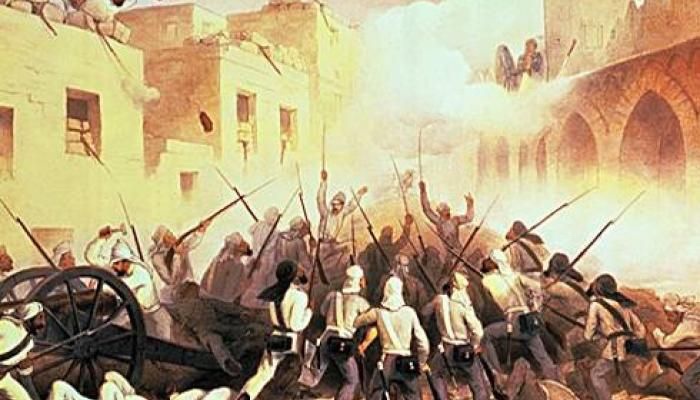
The Chauri Chaura incident unfolded in 1922 during the non-cooperation movement. The movement was at its peak when a protesting mob, incited by the brutality of the British raj, burned police station with 23 officers in it. Gandhi, against the prevailing sentiment, withdrew the movement and embarked on ‘the atonement fast’ (Uposhan), bringing the movement to a halt. This incident is purportedly considered the catalyst for Bhagat Singh to diverge from Gandhi and embrace armed struggle.
Reading this piece of history for the first time in high school, like many others, it angered me. In my perspective, there was nothing wrong in retaliating against the oppressor. I believed that they received their just desserts. And by withdrawing the movement, Gandhi only prolonged India’s quest for freedom, extending the agony of Indians.
The Satyagraha of Dharasana:
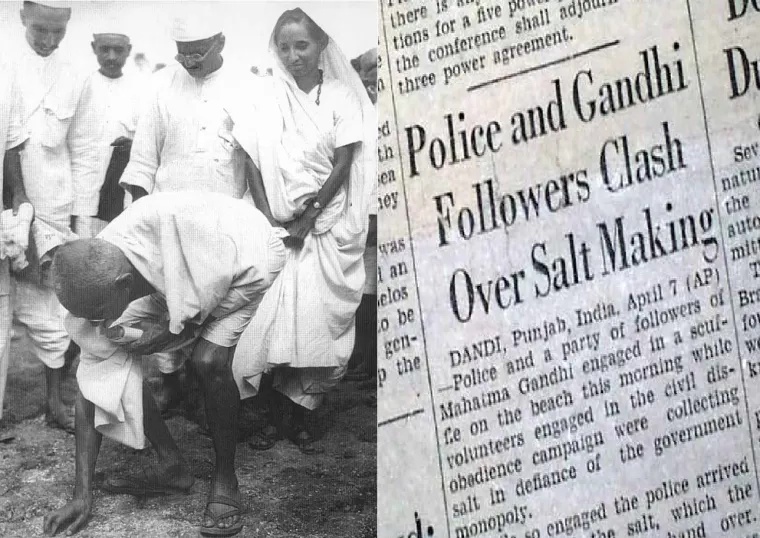
A decade post ‘Chauri Chura’, Gandhi initiated a non-violent protest against the salt tax in Dharasana, a small town in Gujarat. The British, akin to Chauri Chaura, used force to quell the movement. However, this time, the protesters adhered strictly to non-violence. As the American journalist, Webb Miller reported:
“Not one of the marchers even raised an arm to fend off the blows. They went down like ten-pins.” — Webb Miller (American Journalist)
The police’s excessive force led to the death of two protesters and left many injured. This moment, where you despise the oppressor, but you loathe the oppressed even more for not retaliating or not rising in self-defence, was pivotal.
Chauri Chaura vs Dharasana:
In both incidents, oppressed Indians were fighting against British rule, and in both cases, the British used their might to suppress the movement, leading to the death of protesters. Miller encapsulates this feeling in his article as follows:
“At times the spectacle of unresisting men being methodically bashed into a bloody pulp sickened me so much I had to turn away… I felt an indefinable sense of helpless rage and loathing, almost as much against the men who were submitting unresistingly to being beaten as against the police wielding the clubs…” — Miller (American Journalist)
If these were the words of an American, it is not difficult to imagine the rage that an Indian must have felt in those situations. But what distinguishes ‘Darasana Satyagraha’ from Chauri Chaura is the Indian reaction. Compared to the India that lost its patience and took 23 lives in Chauri Chaura, we completely rejected violence as a form of protest. We started believing that ‘Satyagraha’ will yield results. India transformed from a society that wanted to end its opposition to a society that aspires to change the mind of its oppressor through their actions. India began to separate opposing ideas and opposing humans. They started fighting ideology rather than the enemy. This was a significant change which played a crucial role in the building of the new India. An India, where mutually contradicting ideas evolve together without destroying each other.
Gandhi and India:
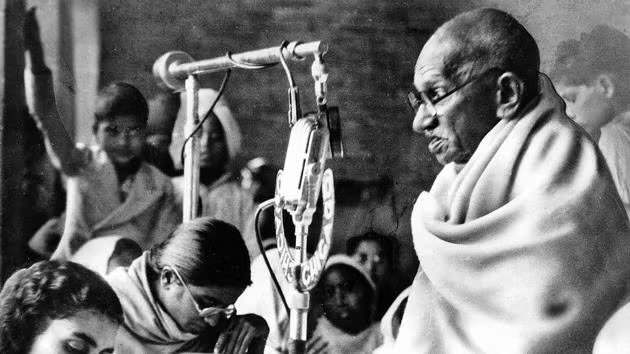
Although we may not always be conscious of it, Gandhi’s teachings are deeply ingrained in our society, with instances of their application evident in the history post-independence. The Partition serves as a prime illustration of this, where Gandhi, along with the broader Indian populace, did not combat Islam or Muslims. Instead, the struggle was against the concept of the two-nation theory. India dismissed the notion of establishing religion as the foundation of the nation. This adherence to secularism remains a source of immense pride for Indians even today. Indeed, it would not be an exaggeration to assert that Gandhi’s teachings are the distinguishing factor between India and Pakistan. It was Gandhi’s principles that prevented us from evolving into a nation driven by ideological fervor. He enlightened diverse groups, who might have conflicting ideas, cultures, and beliefs, to still embrace the humanity in each other, while insisting on justice with non-violence.
Today, as the nation gravitates towards a form of nationhood steered by religious and ideological convictions, and where history is gradually being neglected and, in some instances, obliterated, the teachings of Gandhi hold paramount significance. Upholding justice and non-violence amidst profound anger, and choosing love and kindness over hatred, are principles as pertinent today as they were 70 years ago. It is of utmost importance that we delve into our history and realign with the principles of Satyagraha and non-violence, insisting on justice without resorting to violence.
Conclusion:
Gandhi’s ways of non-violence and ‘Satyagraha’ may not be exhilarating, and they may be slow, painful, and sometimes perceived as a sign of weakness. However, they have played an instrumental role in the building of this nation. These principles bring out the humanity in our opponent and are the soul of India, a legacy that we should never forget.
Disclaimer: Generative AI has been utilized for proofreading and linguistic refinement. I firmly believe that generative AI is a valuable tool that enhances efficiency.
 Prafull Kasture