


Introduction:
I firmly believe that the journey of a teacher is a lifelong learning endeavor.
In 2023, I started a journey to become a Systems Engineering (SE) trainer, and in 2024, I achieved a significant milestone by becoming a SE trainer. However, it’s essential to recognize that continuous learning is crucial for staying updated with the latest advancements in SE. As a trainer, I’ve discovered that teaching and discussing with trainees is an invaluable avenue for deepening my understanding.
Thus as I prepare to deliver SE training, I wish to broaden my audience through a series of articles over time. This marks the beginning of that series, and I’m particularly eager to start with a topic that often goes overlooked: Business and Mission Analysis (BMA). By delving into this topic, I hope to provide valuable insights and perspectives to readers.
Through my previous experience, I’ve observed a common apathy towards BMA, despite its critical importance in ensuring the integrity of systems. BMA zeroes in on the business aspect, illuminating the strategic imperatives that underpin successful system development. Failure to prioritize BMA can have deep consequences, leaving systems ill-equipped to withstand market pressures or generate meaningful returns on investment. In this article, we’ll go deeper into the important role of BMA in shaping systems that are resilient, adaptable, and poised for success in today’s dynamic landscape.
The Reality of BMA in Engineering of Systems:
It’s not uncommon to witness systems engineers diving straight into stakeholder needs and requirements analysis, bypassing the foundational step of BMA. But why is BMA so frequently sidelined? Perhaps it’s because many of the systems engineers are inherently drawn towards technical solutions rather than business intricacies. Moreover, in organizations where business and mission objectives seem well-established, the urgency for explicit BMA might appear diminished.

The Stories: Mercedes, Volvo, Google:
However, recent global events have highlighted the perils of neglecting BMA, especially in industries not traditionally associated with it. Take, for instance, the automotive industry, where established giants like Mercedes and Volvo are facing existential challenges from disruptive technologies. Mercedes, once synonymous with luxury and status, now faces stiff competition from Tesla, whose electric vehicles have captured the imagination of a new generation of wealthy consumers. Volvo, renowned for its commitment to safety, must now navigate the complexities of a market where safety features are no longer a unique selling point because the competition has caught up with it.
Similarly, in the realm of high-tech software and data, the emergence of generative AI has reshaped the competitive landscape. Google, long dominant in the search engine market, now faces the threat of losing market share to Microsoft’s ChatGPT. This paradigm shift underscores the importance of proactive BMA in anticipating and responding to disruptive technologies.
Challenge of VUCA:
In the broader context of a VUCA world—characterized by Volatility, Uncertainty, Complexity, and Ambiguity—rapidly changing technological, social, and political landscapes demand agile business strategies. Organizations that cling to static mission and strategy risk obsolescence in the face of relentless innovation.
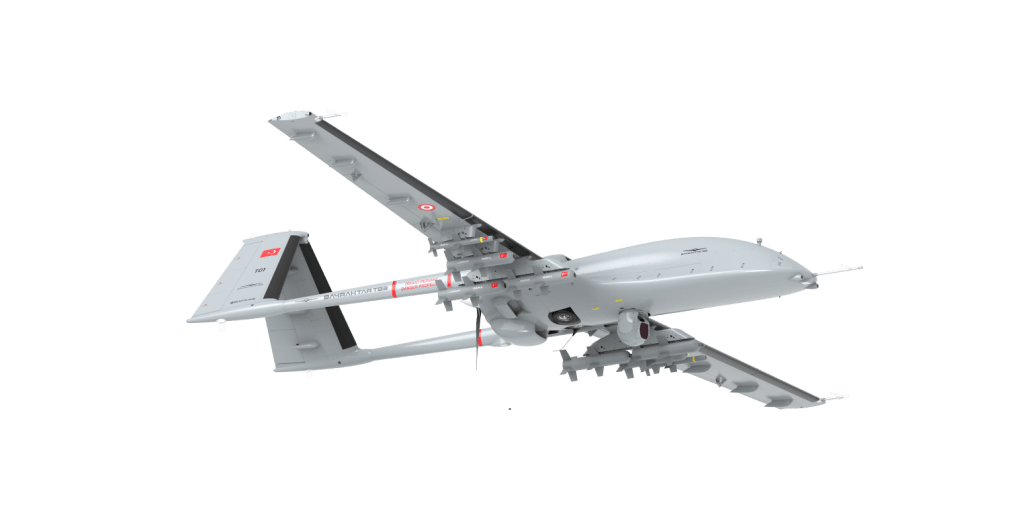
However, the need for BMA extends even to sectors traditionally focused on it, such as defense. Recent conflicts, such as the Armenia-Azerbaijan and Ukraine-Russia conflicts, have demonstrated that even military superpowers can falter in the absence of robust mission analysis. Azerbaijan’s effective use of drones in the Armenia-Azerbaijan war and Ukraine’s utilization of smart technology to stall Russian advances underscored the critical importance of BMA in adapting to evolving threats.
Conclusion: BMA the Foundation Successful Systems in Dynamic world:
In essence, BMA is the bedrock upon which successful systems engineering endeavors are built. Just as a building’s foundation provides stability and resilience against external forces, BMA ensures that our solutions are aligned with strategic objectives and capable of withstanding the winds of change. Neglecting BMA is akin to constructing a skyscraper on shifting sands—it may stand tall for a while, but eventually, it will crumble under the weight of unforeseen challenges.
As systems engineers, let us heed the lessons of history and embrace BMA as the cornerstone of our practice. Only then can we hope to build solutions that stand the test of time and deliver enduring value.
In coming articles i will discuss how to do BAM during engineering of a system. Stay tune for the update.
Disclaimer: Generative AI has been utilized for proofreading and linguistic refinement. I firmly believe that generative AI is a valuable tool that enhances efficiency.
 Prafull Kasture
One Reply to “”